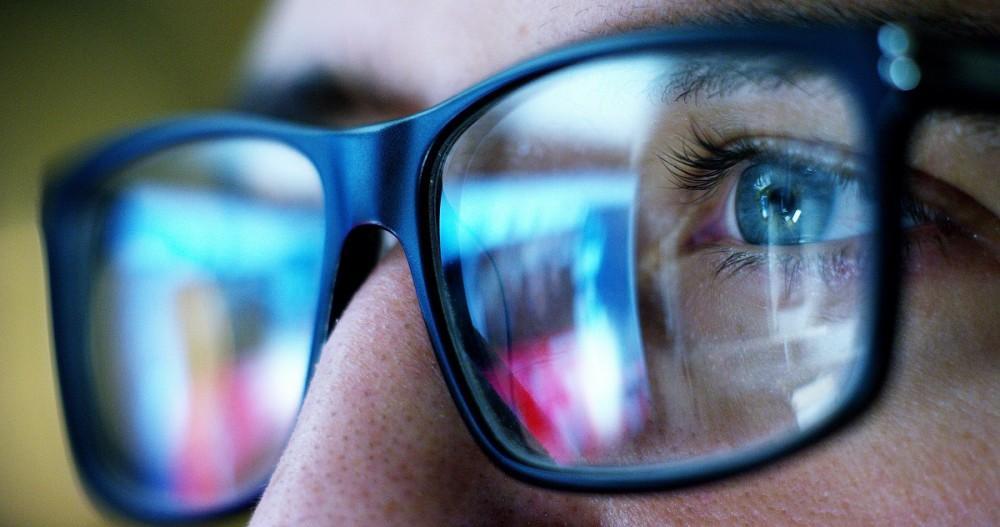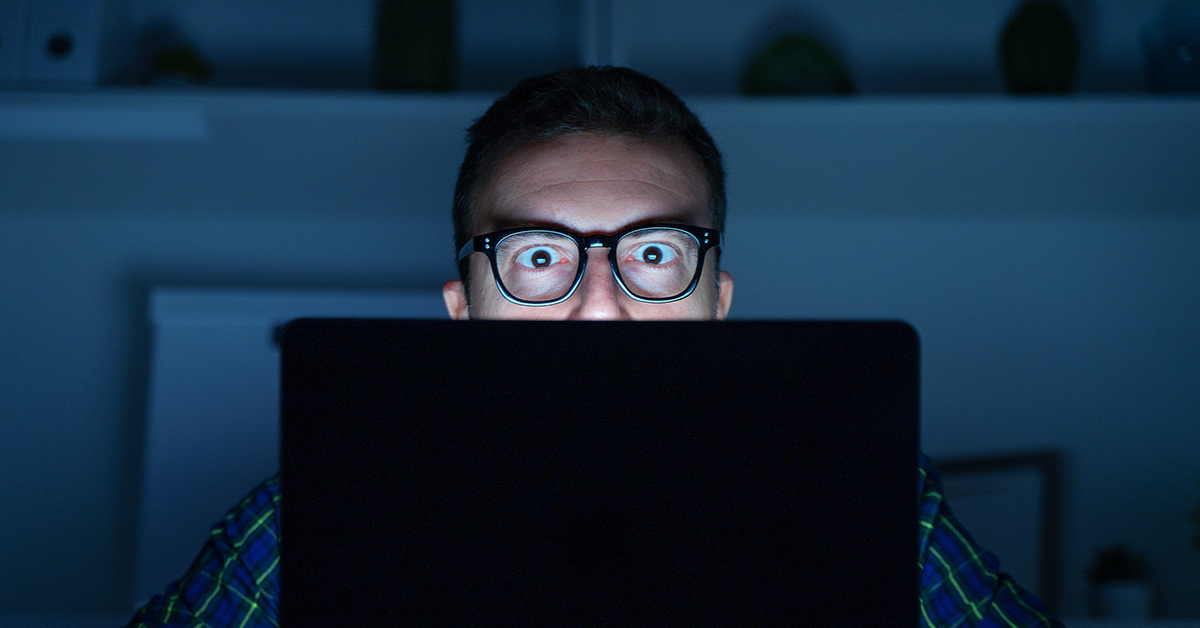
You’re not imagining it….your eyes are more tired, your brain is more scattered and your energy runs out long before the day does.
If you’re a parent today, screen fatigue is practically built into the job. Between work Zoom calls, preschool apps, late-night grocery scrolling, baby monitor checks, and the occasional scroll through Instagram “for just five minutes,” screens aren’t something we can log off from. They’re part of how we live, how we work, and how we try desperately to stay on top of it all.
But here is the truth most of us are not talking about: constant screen time is draining our energy, our focus, and our ability to stay present.
And no, the answer is not unplugging and moving to a forest. It is about protecting your eyes, your nervous system and your capacity to keep showing up as a parent, even in a screen-filled world.
The Silent Weight of Screen Time on Parents
If you feel like you are more tired than ever before, it is not in your head. It is in your eyes. It is in your nervous system. And yes, it is in your relationship with your screens.
According to a 2023 report by Statistics Canada, the average Canadian adult spends 8.9 hours per day in front of a screen. That’s a combination of work, entertainment, parenting tasks and communication. And for parents? That number creeps even higher. A 2022 survey by the Canadian Paediatric Society found that 87% of parents use screens daily to manage their household or parenting duties, with nearly 50% reporting screen use past 10 p.m.
Why does that matter?
Because screen exposure, especially blue light from phones, tablets, and laptops, has been scientifically linked to:
- Eye strain
- Headaches
- Dry or irritated eyes
- Blurry vision
- Poor sleep
- Mental fatigue
Add all that to the mental load of parenting and it’s no wonder you feel exhausted before you’ve even had a chance to rest.
What Is Blue Light, and Why Is It So Draining?
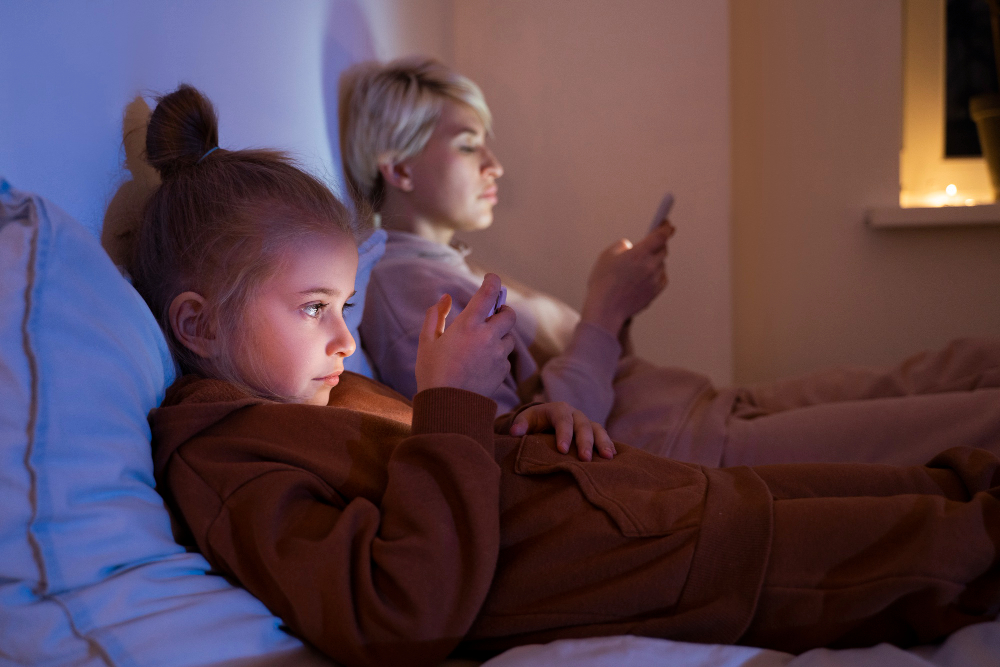
Let’s break this down: blue light is a high-energy visible light (HEV) that comes from sunligh but also from LED screens like your laptop, tablet, TV, and phone.
In moderation and during the day, blue light can actually help boost alertness and regulate your natural circadian rhythm.
But excessive blue light exposure, especially at night, has the opposite effect.
According to Harvard Medical School:
“Blue light suppresses the body’s secretion of melatonin more than any other wavelength of light.”
This means your body stays in “awake mode” long after it is time to wind down.
Real-world effects of too much blue light exposure:
As a parent, following symptoms affect your ability to be patient, your capacity to focus and even how much joy you are able to feel in daily routines.
- Insomnia or broken sleep
- Daytime grogginess even after sleeping 7–8 hours
- Eye strain and headaches from staring at screens too long
- Irritability, tension, and foggy thinking
Parenting in the Age of Always-On Screens
Modern parenting often means toggling between roles constantly: worker, caregiver, cleaner, snack-dispenser, and scheduler, all managed via screens.
Let’s be real:
- You check your child’s daycare app on your phone.
- You respond to work emails while cooking dinner.
- You decompress with a show or scroll after the kids are asleep.
You might be “done parenting” for the day, but your eyes never stop working.
And it adds up.
Signs You’re Experiencing Digital Fatigue
Here are subtle (and not-so-subtle) signs that your body is craving relief:
- You rub your eyes constantly, but it doesn’t help
- You get headaches in the late afternoon or evening
- You feel mentally fuzzy or unfocused by mid-day
- Your sleep feels shallow, and you wake up tired
- You get irritated easily, even when nothing major has happened
- You can’t remember the last time you read without backlighting
If you’ve nodded yes to more than a few of these, you are not alone and there are simple, evidence based ways to start reclaiming your clarity and energy.
What Helps (and What Doesn’t)
Let’s clear this up first:
Telling parents to “just unplug” doesn’t help.
Screens are part of how we survive, not a luxury we can ditch.
But there are tools and habits that make a measurable difference:
The 20-20-20 Rule
Every 20 minutes, look at something 20 feet away for 20 seconds.
This helps relax the eye muscles and prevent long-term strain.
Adjust Your Lighting
Turn off harsh overhead lights at night. Use warm-toned ambient lighting when possible.
Reduce Glare
Use matte screen protectors or change your screen brightness to match room light levels.
Blue Light Filtering Lenses
Some parents now wear blue light glasses throughout the day or specifically during late-night scrolls, Zoom calls, or laptop-heavy work sessions. These help reduce glare, encourage melatonin production and reduce dry eyes without medication or tech detoxing.
What to Look for in a Blue Light Glasses (No, They’re Not All the Same)
If you’ve ever Googled “blue light glasses,” you’ve probably felt overwhelmed by options.
Here’s what matters most:
- Verified blue light blocking lenses (not just yellow tint)
- Anti-reflective coating to cut down on glare
- Lightweight frame that won’t cause pressure headaches
- Comfortable fit for extended wear
- A style you actually want to wear (because let’s be honest… that matters)
Some newer options come with protective cases and are designed for women or men working from home, multitasking, or gaming after hours,ideal for modern parents trying to balance 17 tabs at once (physically and digitally).
Should You Try Blue Light Glasses?
Let’s be clear—blue light glasses aren’t a magic fix.
But for many parents, they’re an easy, wearable, and subtle shift that:
- Makes evening screen time more tolerable
- Reduces tension headaches
- Encourages better sleep
- And most importantly: gives their eyes (and mind) a break
Think of them as support. Like a cushion for your eyes. A boundary that lets your body know: it’s okay to rest.They’re especially helpful for:
- Work-from-home parents
- Nighttime scrollers
- Parents who game, binge, or multitask after bedtime
- Anyone who regularly experiences screen-related fatigue
You Deserve Clarity, Calm, and Rest
You don’t have to feel this drained every day.
You don’t have to live with constant eye strain, blurry vision or a brain that feels like it’s buffering.
There are small shifts..like adjusting your screen habits, changing your lighting or slipping on a pair of blue light filtering glasses that can protect your energy and restore a little calm.
Because parenting isn’t about being perfect.
It’s about showing up, tired eyes and all, and doing the best you can.
And if there’s a way to make that easier, even just a little?
You deserve it.
At CareFlow Foundation, we understand that parenting today looks very different than it did even a decade ago. The demands are higher. The noise is louder. The exhaustion is real.
That’s why many of the tools we recommend, including blue light glasses, are meant to make modern life just a bit more livable.